Introduction
Most colour advice in fashion was not written with Indian skin tones in mind.
The standard guidance — wear neutrals, stick to beige and grey, black is always safe — was built around a different default. And while some of it holds, a lot of it quietly works against the warmth, depth, and richness that Indian skin tones naturally carry.
The result is wardrobes full of colours that are technically inoffensive but never quite right. Shades that don’t clash but don’t do anything either. A lot of greige and cool grey that looks sharp on someone else and slightly flat on you.
This blog is a practical guide to understanding how colour actually interacts with Indian skin — wheatish, dusky, medium brown, and deep brown — and which specific shades work with your natural tone rather than against it.
Understanding Indian Skin Tones: Warm, Neutral, and Cool Undertones
Before colours, you need to understand undertones — because this is where most colour advice goes wrong.
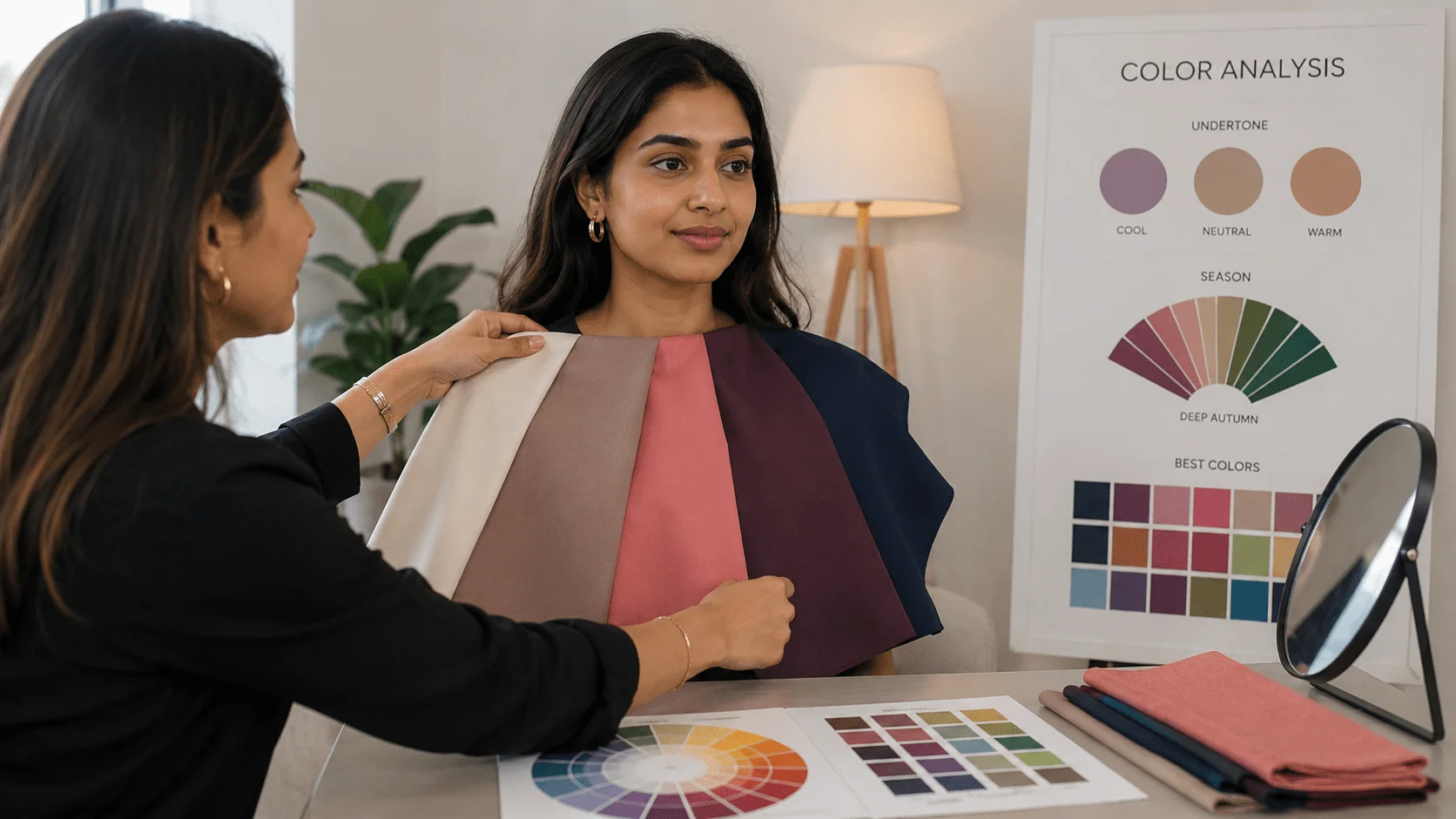
Indian skin tones span a wide spectrum of surface shades, but the undertone beneath the surface is what determines which colours genuinely flatter. There are three categories:
Warm undertones — golden, yellow, or peachy beneath the surface. Very common across Indian skin. When you’re in sunlight, your skin looks golden rather than pink. Gold jewellery tends to suit you more than silver.
Neutral undertones — a mix of warm and cool, with no strong lean either way. Both gold and silver jewellery work. Most colours are adaptable with the right shade selection.
Cool undertones — pink, red, or bluish beneath the surface. Less common in Indian skin but present. Silver jewellery tends to sit better than gold. Skin looks more pink or rosy than golden in natural light.
A quick way to check: look at the veins on your inner wrist. Greenish veins suggest warm undertones. Blue or purple veins suggest cool undertones. A mix of both suggests neutral.
This matters because neutral colours — beige, grey, white, camel, cream — don’t behave uniformly across undertones. A warm beige flatters warm undertones and clashes with cool ones. A cool grey works on cool undertones and drains warm ones. The shade within the neutral is as important as the neutral itself.
The Neutrals That Work — and the Ones That Don’t
Not all neutrals are created equal for Indian skin tones. Here’s a clear breakdown:
Whites: Cool, stark white — the blue-white of most bright whites — tends to wash out warmer Indian skin tones by creating too much contrast without warmth. It can work on very deep skin tones where the contrast is the point, but for medium and wheatish tones, it often reads harsh.
Wear instead: Off-white, ivory, and warm cream. These sit within the warm spectrum and complement rather than compete with golden and warm undertones. They still read as clean and fresh but without the starkness.
Beiges and Tans: Cool-leaning beiges — the kind with a greyish or pinkish base — tend to blend into wheatish and medium Indian skin tones in a way that looks invisible rather than intentional. The outfit disappears rather than enhancing.
Wear instead: Warm camel, honey, and golden tan. These share the warm undertone of most Indian skin and create a tonal harmony that’s quietly flattering. Deep camel on warm brown skin is one of the most naturally elegant colour combinations in Indian fashion.
Greys: Cool grey is one of the most common recommendations in neutral fashion advice — and one of the most consistently unflattering shades for warm Indian skin tones. It introduces a coolness that competes with warm undertones and can make the complexion look dull.
Wear instead: Warm greige (grey with a beige or yellow base), taupe, and mushroom. These sit between grey and beige with enough warmth to work with Indian skin rather than against it. If you love grey, go deep — charcoal and dark slate work because the depth of colour creates contrast rather than flatness.
Browns: Warm browns — chocolate, coffee, deep mahogany — are some of the most underused colours for Indian skin, particularly medium and deeper tones. There’s a misconception that wearing brown close to your skin tone will make you look washed out. The opposite is often true: a deep, rich brown on warm brown skin creates a luxurious tonal effect.
Wear instead of light khaki or dusty brown: go either deeper (chocolate, espresso) or warmer (cognac, rust-brown) for maximum effect.
The Colours That Actually Elevate Indian Skin Tones
Beyond the neutral conversation, there are specific colour families that consistently work across most Indian skin tones — and don’t get enough attention in standard fashion advice.
Earthy warm tones: Terracotta, rust, burnt orange, and deep ochre sit in the warm spectrum that echoes the undertones in most Indian skin. These colours don’t just complement — they enhance. They bring warmth forward and create a glow effect that cooler colours can’t replicate.
These work across wheatish, dusky, and deep brown skin tones without significant modification — the whole family tends to sit well.
Rich jewel tones: Deep teal, emerald green, cobalt blue, and aubergine work particularly well on dusky and deeper Indian skin tones because they create a strong, clear contrast without the harshness of bright primaries.
For wheatish and medium tones, muted versions of these jewel tones — dusty teal, olive green, indigo — work better than saturated versions, which can overwhelm a lighter brown complexion.
Warm pastels: Standard pastels — the cool lavender and baby blue common in Western spring palettes — tend to look washed out on Indian skin. But warm pastels are an entirely different story.
Dusty rose, warm peach, muted coral, and soft terracotta-pink all sit in the warm pastel family and work beautifully on wheatish and medium brown skin. They’re softer than full earthy tones but carry enough warmth to flatter.
Warm mustard and golden yellow: One of the most consistently flattering colours across Indian skin tones. Mustard, saffron, and golden yellow share the warm undertone of Indian skin and create a vibrancy that neutral colours rarely achieve. This is the colour that consistently photographs well on Indian skin — there’s a reason it appears so often in traditional Indian textiles.
Colour Tips by Specific Skin Tone
For wheatish skin tones: Your skin has natural warmth that a lot of colours can enhance. The colours to lean into are warm camel, dusty rose, terracotta, olive, warm white, and golden mustard. The colours to use carefully are cool grey, stark white, cool pastel blue, and very light beige — they can flatten the warmth your complexion naturally carries.
For dusky and medium brown skin tones: You have the most versatile canvas for colour. Deep jewel tones, rich earthtones, warm neutrals, and bold saturated shades all work with your colouring. The colours to be cautious of are very muted, desaturated tones — dusty pastels and cool greys — which can look dull against the richness of your skin. You can go deeper and bolder than most.
For deep brown skin tones: High contrast works in your favour. Bright whites, bold jewel tones, deep rich browns, and warm saturated colours are your strongest allies. The colours to avoid are the middle-ground muted tones — light grey, light khaki, washed-out pastels — which neither contrast nor complement. Go either bold or deep.
A Practical Rule to Remember
When in doubt, ask one question before buying any colour: Does this share the temperature of my undertone?
Warm skin + warm colour = harmony. Warm skin + cool colour = competition.
This single rule will eliminate most bad colour purchases before they happen. You don’t need to memorise a list — you just need to know whether the shade you’re looking at is warm or cool, and whether that matches what your skin is doing.
Check in natural light when possible. Artificial store lighting flatters almost everything and tells you very little about how a colour will actually interact with your skin in the real world.
Conclusion
The neutral palette isn’t wrong — it just needs to be the right neutrals. Warm whites instead of stark ones. Camel instead of cool beige. Charcoal instead of cool grey. Warm greige instead of flat taupe.
And beyond neutrals, Indian skin tones have a warmth and richness that earthy tones, jewel tones, and warm mustards complement in ways that most standard colour advice never acknowledges.
Dress for your actual undertone, not for a generic palette that wasn’t designed with you in mind. The right colour doesn’t just make an outfit look better — it makes you look better, which is the only thing that actually matters.